South India Export Guide – Sectors, Ports & Procedures
- Home
- >
- Blog
South India's Export Advantage: A Practical Guide for Global Buyers and Sellers
South India – comprising Tamil Nadu, Karnataka, Andhra Pradesh, Telangana and Kerala – is a powerhouse of export-oriented industry and agriculture. The region leads in electronics, automotive, marine products, spices and pharmaceuticals, backed by world-class ports and airports. In FY2024-25 Tamil Nadu alone exported goods worth over $52 billion, with its electronics sector reaching nearly $12 billion in just eight months. Andhra Pradesh's exports hit ₹1.6 lakh crore ($19.3B) in FY24, driven by seafood and pharma. Kerala is India's spice and coffee hub – for example, 44% of India's pineapple exports and a majority of cardamom and pepper exports originate from Kerala. Together, South Indian ports handle a large share of the country's outbound trade, offering global buyers a reliable source of goods and exporters an efficient gateway to markets.
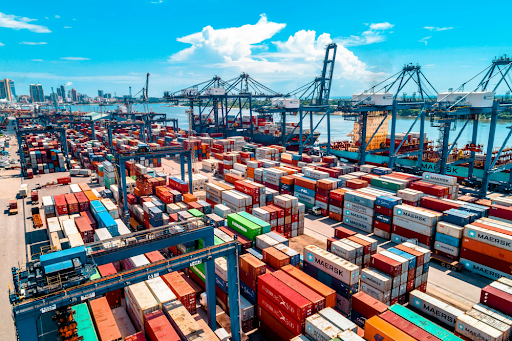
Figure: A busy container terminal at a major South Indian port. South India has multiple deep-sea ports (Chennai, Tuticorin, Kochi, Visakhapatnam, Mangaluru, and the upcoming Vizhinjam) that handle a variety of cargo – from containers to bulk shipments – with direct links to global trade routes. These logistics hubs give the region an export edge.
Top Export Sectors in South India
South India's export industries are diverse and robust. Key sectors include:
- Electronics & IT: Tamil Nadu and Karnataka are major electronics producers. Tamil Nadu accounted for 38% of India's electronic exports in FY24, contributing nearly $12B in exports from April–Nov 2025. Bengaluru's IT exports (software/services) also feed global supply chains.
- Automotive & Engineering: Tamil Nadu (Chennai, Coimbatore) and Karnataka (Bengaluru) host major auto manufacturers and parts suppliers. Karnataka's growth in aerospace and automotive is notable. Andhra's automotive exports (valued ₹5,518 crore in FY24) are emerging.
- Marine Products: Andhra is India's largest seafood exporter. It supplies about 60% of India's marine exports, with shrimp and prawns alone worth ₹19,776 crore in FY24. Kerala and Tamil Nadu also ship spices and marine products worldwide.
- Spices, Coffee & Plantation Crops: Kerala leads India in spice exports – Malabar pepper and GI-tagged Alleppey cardamom dominate the market. Kerala produces 44% of India's pineapple exports and is a major contributor to India's coffee exports. Karnataka and Tamil Nadu also export tea, coffee and spices.
- Pharmaceuticals & Chemicals: Telangana/Andhra (Hyderabad and Visakhapatnam) and Tamil Nadu (Chennai) are pharma hubs. Andhra exported medications worth ₹10,875 crore in FY24, ranking it among India's top 5 pharma-exporting states.
- Textiles & Apparel: Tamil Nadu (Coimbatore, Tiruppur), Andhra, and Karnataka (Mysore silk) ship cotton, garments and silk products internationally. South India has specialized apparel SEZs and export promotion councils.
These industries benefit from South India's skilled workforce and clusters. Global buyers can source high-tech electronics in Chennai or Bangalore, spices from Kerala's co-ops, and seafood from Andhra's farms – often at competitive prices thanks to low production costs and dedicated export infrastructure.
Infrastructure & Logistics – Connecting to World Markets
South India's geography and infrastructure give exporters an advantage:
- Deep-Water Ports: Chennai (Tamil Nadu) and Tuticorin (V.O. Chidambaranar, Tamil Nadu) have modern container terminals handling ships from Europe, America and Asia. Cochin Port (Kochi, Kerala) handles chemicals, petroleum and containers, while Krishnapatnam (Andhra) and Visakhapatnam (AP) are key for bulk and containers. The soon-to-be-completed Vizhinjam Port (Kerala) will be India's first transshipment hub, further reducing reliance on foreign hubs.
- Air Cargo: International airports in Chennai, Bengaluru, Hyderabad and Kochi offer daily freighter services. Chennai Airport (MAA) is Asia's largest exporter of perishables (seafood, flowers) and is well-connected to Middle East/Europe. The Chennai–Dubai–Panama–Miami air route enables textiles and machinery to reach South America in ~7–10 days. Bangalore (BLR) and Hyderabad (HYD) airports also serve large tech and pharma shipments.
- Road/Rail Network: The Golden Quadrilateral highway and dedicated freight corridors link South Indian industrial centers to northern markets and ports. Regular rail cargo (Container Freight Stations) operate in Chennai, Hyderabad, Bangalore and Kochi, integrating with inland hubs. These multimodal links cut transit time.
- Trade Facilitation Zones: Export Promotion Industrial Parks (SEZs) in Chennai, Visakhapatnam and Bangalore allow bonded export processing. On-ground support is offered by Export Promotion Councils (EPCs) – for example, the Marine Products EPC, Spices Board (Kerala), and Electronics and Computer Software EPC – which provide regulatory guidance and market access support.
South India offers one of the most reliable export ecosystems with strong infrastructure and global connectivity. Multiple major ports mean exporters can choose the fastest or cheapest route for every shipment.
Export Procedures and Compliance
Doing business in India's export environment requires a few formal steps and documentation, but many processes are now digital:
- Importer-Exporter Code (IEC): Every exporter must register for an IEC with the Directorate General of Foreign Trade (DGFT). This 10-digit code is mandatory for customs clearance and banking.
- Export Documentation: Key documents include the Commercial Invoice, Packing List, Shipping Bill (Bill of Export), and Certificate of Origin (CoO). The CoO proves goods originate in India for preferential tariffs and can now be issued paperlessly via DGFT's new online portal. Other papers may include an Export License (for restricted items) and relevant quality certificates (FSSAI for food, BIS for electronics, etc.).
- Tax and Incentives: Exports are zero-rated for GST (i.e. GST paid on inputs is refunded) and attract incentives under schemes like RoDTEP (Remission of Duties & Taxes on Export Products). MSME exporters may get interest subsidies (Niryat Bandhu scheme) or duty drawback. It's wise to consult the local EPC (e.g. CEPC, Spice Board) for available benefits.
- Customs Clearance: Indian Customs now largely uses a faceless, risk-based clearance. In practice, a properly documented shipment is released typically within 2–4 days. Ensuring correct HS codes and licences ahead of time speeds the process.
- Compliance Check: Global buyers should verify that their South Indian suppliers hold the mandatory registrations relevant to their product category – FSSAI licensing for food and agro products, APEDA registration for agricultural and processed food exports, and IEC (Import Export Code) from DGFT as the baseline export compliance credential. These registrations ensure every shipment is legally compliant, traceable, and cleared for international trade.
By following India's standardized export procedures and leveraging online portals, exporters in Tamil Nadu, Kerala and beyond can ship to any market with minimal bureaucratic delay. DGFT's online portal now supports electronic Certificates of Origin (e-CoO), making CoO issuance instant and paperless – a boon for export efficiency.
Case Studies & Success Indicators
- Electronics Boom in Tamil Nadu: In FY2024-25, TN's electronics exports grew 53% year-on-year. The state's export cluster – from mobile phones to semiconductors – has attracted investment and meets global demand. Industry observers note TN could reach ~$18B in electronics exports by FY25-26.
- Seafood from Andhra Pradesh: Andhra's shrimp farms and processing units supply the US and EU. Capturing 60% of India's marine export share, AP's frozen shrimp exports alone were ₹19,776 crore (~$2.4B) in FY24. Cooperative cold chains and proximity to ports like Kakinada/Visakhapatnam underpin this success.
- Kerala's Spice & Coffee Cluster: Kerala's spice producers (pepper, cardamom) and coffee growers (Wayanad Robusta) have benefited from global demand and recent tax cuts. India's pepper exports (mostly from Kerala) were $87M in 2022-23, and cardamom $102.4M in 2023. Improved margins from GST reforms have made Kerala's agriproducts more competitive internationally.
Tip for Global Buyers: South Indian exporters often deal with full container loads (FCL) or less-than-container loads (LCL). Scheduling shipments via Chennai or Kochi can cut transit time to Europe by a week compared to northern ports. Also, many Indian trade shows allow buyers to connect directly with verified suppliers.
Practical Tips for Exporters and Importers
- Research Trade Data: Use sources like DGCIS or specific state trade departments for export figures. Tamil Nadu's Commerce Dept reports a record Rs.52,074 crore exports in 2024-25, indicating demand trends.
- Choose the Right Port: For east coast destinations, use Chennai or Visakhapatnam. For westbound cargo (US/Europe), Kochi or Chennai's transshipment links are faster. For urgent air shipments, Chennai or Bengaluru airports are best.
- Understand Incoterms and Duties: Clarify terms (FOB/CIF) up front. India has FTAs with ASEAN, Korea and others; use Certificates of Origin for duty concessions where applicable. For example, an FTA with the UAE allows reduced duties on eligible goods.
- Quality & Certification: Many export items require quality checks. Spices often need fumigation certificates; IT/BT goods require IEC registration; organic or GI products (like Wayanad coffee) may fetch premium prices abroad.
- Trade Finance & Insurance: Explore export credit insurance (ECGC in India) to protect against non-payment. Also, banks can provide pre-shipment and post-shipment finance schemes to ease cash flow.
By following these guidelines, global buyers can tap South India's vast supply base with confidence, and sellers can efficiently reach markets in the USA, Europe, Middle East and beyond.
Disclaimer: The information in this article is for general guidance only and does not constitute legal, financial or trading advice. If you are a buyer looking for a reliable exporter to source, procure and supply products across the globe, please contact us – Vasco Exim Overseas LLP is equipped to support your requirements end-to-end.